Intermediate and advanced students: get 88 weighted keys.
You do not need an expensive acoustic grand piano to start learning online. I strongly recommend getting an instrument with 88 fully weighted keys (hammer action).
Weighted keys simulate the physical feel of a traditional piano. They help build finger strength, control dynamic volume, and establish sound technique right from the first lesson.
If you're taking keyboard classes instead, or if you're a beginner, you don't absolutely need to get 88 keys. Read on for some good starter keyboard recommendations.
Kids & Starter Keyboards (<$100 – $200)
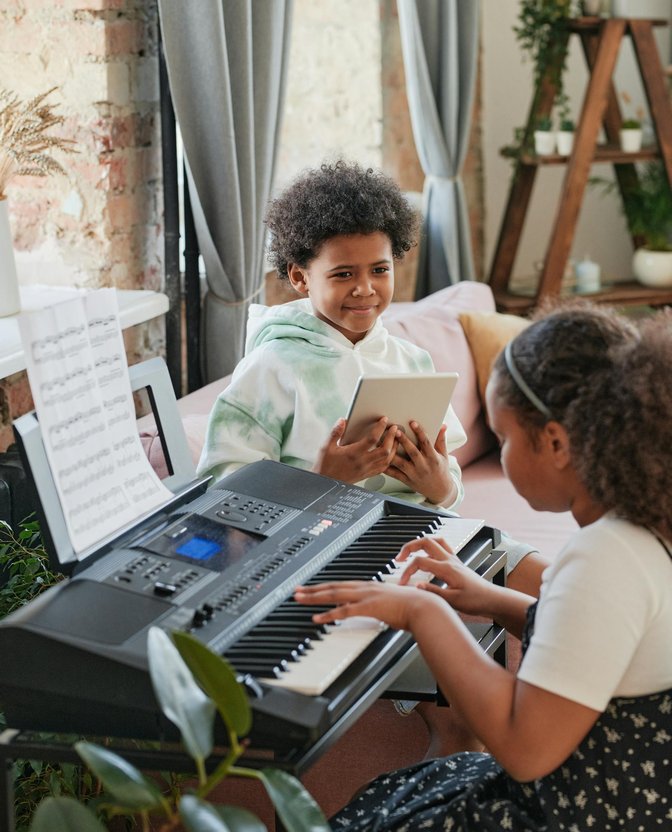
If you are getting a setup specifically for young children starting out, or you're a beginner yourself, you don't need to spend a fortune on a big digital piano right away. A 61 to 88-key unweighted keyboard is completely sufficient for learning music basics, rhythm, and melody. Just make sure to get a keyboard with touch-sensitive keys, meaning you can play loud and soft on it.
-
Yamaha PSR-E383 (~$200)
A fantastic 61-key touch-sensitive keyboard. The touch sensitivity lets children practice dynamic volume control as they press keys lighter or harder.
Beginner Piano Level (~$300 – $500)
The following keyboards are good first instruments for people starting piano.
-
Alesis Recital Pro (~$350)
A budget-friendly entry point featuring 88 hammer-action keys and clear built-in speakers.
-
Yamaha P-145 (~$500)
A reliable 88-key weighted digital piano featuring Yamaha's Graded Hammer Compact (GHC) action. Compact, durable, and one of my top recommendations.
-
Roland FP-10 (~$500)
Offers Roland's PHA-4 Standard hammer action, providing authentic key touch at an accessible price point.
Intermediate Piano Level (~$600 – $800)
If you've played piano before or have taken lessons for a year or two, you might want to upgrade to a keyboard with a richer acoustic sound, better speaker output, and more precise key resistance for better dynamic control.
-
Roland FP-30X (~$700)
Features Roland's SuperNATURAL sound engine, powerful internal speakers, and Bluetooth connectivity for backing tracks.
-
Yamaha P-225 (~$750)
A slim-body instrument modeled after Yamaha's CFX concert grand voice, offering detailed dynamic control.
Advanced Piano Level (~$900 – $2,000+)
Designed for experienced piano students seeking realistic key textures, wooden touch elements, and maximum acoustic realism. At this price point, any digital keyboard with 88 keys from the 3 big brands (Kawai, Roland and Yamaha) is going to be a decent choice. To see what's the best fit for you, I recommend going to a music store and trying out a few keyboards, but here are a couple suggestions.
-
Kawai ES120 (~$900)
Features Kawai's Responsive Hammer Compact key action and samples recorded from their Shigeru Kawai concert grand.
-
Roland FP-90X (~$2,000)
Roland's flagship portable piano featuring hybrid wood/molded keys and advanced acoustic modeling.
Keyboard Stands
A stable stand keeps your keyboard at the correct height and prevents distracting wobbles during practice.
Avoid Single-X Stands: I do not recommend single-X stands. They wobble easily under dynamic playing and can cause wrist fatigue.
-
Double-X Stand (~$40 – $70)
Almost any double-X stand will be fine. Reinforced double-bar steel legs provide much greater stability than single-X models while remaining easy to fold and store.
-
Z-Style Heavy-Duty Stand (~$50 – $90)
Provides maximum stability with complete leg clearance underneath, making it extremely comfortable for long practice sessions.
Pedals, Benches & Accessories
A few practical additions to complete your home setup.
-
Piano-Style Sustain Pedal (~$20 – $35)
I recommend only pedals that look like piano pedals. The M-Audio SP-2 is a great and affordable choice.
-
Adjustable Keyboard Bench (~$30 – $80)
An adjustable padded seat allows you or your child to set the exact elbow height needed for comfortable playing.
-
Wired Studio Headphones (~$30 – $100)
The better your headphones are, the more beautiful your instrument will sound through them! A quality pair of over-ear headphones makes a huge difference if you need to practice quietly at home without disturbing others. Make sure to get wired headphones with a 1/4 inch jack connector.
Have Questions About Your Setup?
Test your keyboard live with me during a free trial lesson. I'll help you verify your audio and camera placement before you start!
Book a Free Trial Lesson